Understanding Data Localization Rules in India
India's data localization story has taken more turns than most people realize. From early drafts that demanded strict local storage to the DPDP Act's more flexible approach, here's what actually changed and why it matters for your data.
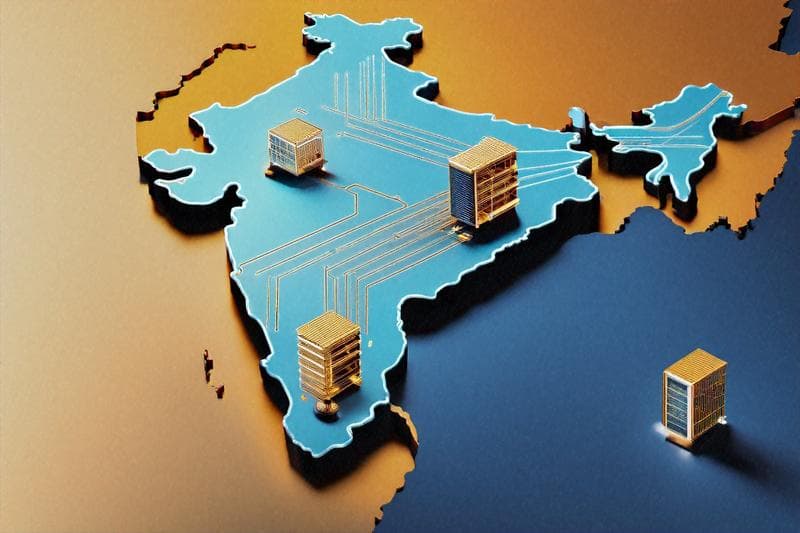
So here's the thing about data localization in India — the conversation has been going on for nearly a decade now, and what we ended up with looks almost nothing like what was originally proposed. Back in 2018, when the first Personal Data Protection Bill draft landed on Parliament's table, the requirement was blunt: keep a copy of all personal data on servers physically located in India. No exceptions for "sensitive" personal data; that had to stay here entirely. The tech industry panicked. Trade bodies from the US lobbied hard. And then the whole thing got reworked, scrapped, and reworked again.
I think most people missed the significance of that shift. The final Digital Personal Data Protection Act of 2023 didn't mandate localization at all in the traditional sense. It took a blacklist approach instead — your data can flow anywhere except to countries the Central Government specifically restricts. As of early 2026, that restricted list hasn't been published yet. Which means, technically, data can move freely to most jurisdictions right now. That's a massive departure from where this started.
But that's only the DPDP Act side. Sector-specific rules tell a very different story, and they're probably the ones that affect you more directly.
The RBI Mandate and Financial Data: Where Localization Actually Bites
The Reserve Bank of India didn't wait for a full privacy law. In April 2018, it issued a circular requiring all payment system operators to store transaction data "only in India." The deadline was October 2018. Six months. For companies processing millions of transactions across global infrastructure, that was a really tight window.
Visa and Mastercard scrambled to set up local data storage. PayPal had to restructure its data flows. Google Pay, PhonePe, and other UPI apps were already largely compliant since they operated through the National Payments Corporation of India's infrastructure. But foreign payment processors? They spent tens of crores building Indian data centers or partnering with local providers just to meet this one requirement.
The RBI's reasoning wasn't unreasonable, to be fair. During investigations into financial fraud, Indian regulators kept running into a wall — the data they needed sat on servers in Singapore or Virginia, and getting access required navigating lengthy mutual legal assistance treaties. Local storage meant the RBI and law enforcement could issue domestic orders and get what they needed quickly. That's a legitimate concern when you're dealing with financial crimes that move at the speed of digital transactions.
What's interesting is the scope creep since then. The original circular covered payment data. But subsequent clarifications expanded this to include the full end-to-end transaction data — which means not just the payment amount and parties, but metadata like IP addresses, device information, and even location data captured during the transaction. Some payment companies have quietly grumbled that this goes well beyond what's needed for regulatory oversight, but nobody's pushed back publicly. You don't pick fights with the RBI if you want to keep operating in India.
There's also the question of what "stored in India" actually means in a world of distributed systems. Does it count if the primary database is in India but cached copies exist in Singapore for performance? What about encrypted backups in a different region? The RBI's guidance hasn't been fully clear on edge cases, and different companies have interpreted the requirement differently. Some maintain complete data isolation — nothing leaves Indian borders, period. Others keep primary copies local but allow transient processing abroad, arguing that the spirit of the circular is about regulatory access to data, not about preventing every byte from crossing a border. The lack of a clear technical definition has created a compliance gray zone that benefits large companies with sophisticated legal teams and puts smaller ones at a disadvantage.
SEBI added its own layer in 2019. The Securities and Exchange Board of India required stock brokers, depositories, and mutual fund houses to store data related to investors and transactions within Indian borders. The rationale mirrored the RBI's — faster regulatory access, better oversight of market manipulation, and the ability to audit without cross-border complications. For the securities industry, this was less disruptive since most of the major players already ran local infrastructure. But foreign portfolio investors and global custodian banks had to rethink their data architectures.
Then there's telecom. The Department of Telecommunications has long required that call data records, subscriber information, and network logs remain in India. This predates the modern localization debate by years — it's rooted in national security considerations rather than privacy. After the 2008 Mumbai attacks, the government tightened these requirements considerably, and telecom operators know better than to push back on security-related mandates.
What the DPDP Act Actually Says (and Doesn't Say) About Cross-Border Transfers
Let me be specific about the DPDP Act's approach because I've seen a lot of confusion around it. Section 16 of the Act says the Central Government may, by notification, restrict the transfer of personal data to any country or territory outside India. That's it. There's no positive list of approved countries. There's no adequacy determination process like the EU's GDPR requires. There's no requirement to do transfer impact assessments.
The practical effect right now is something close to free flow with a government veto. Data fiduciaries — that's the DPDP Act's term for organizations that determine how and why data is processed — can send personal data pretty much anywhere unless the government says otherwise. Some legal experts I've spoken with think this was deliberate. India wanted to avoid the bureaucratic overhead of assessing every country's data protection regime while still keeping a kill switch for geopolitical situations.
Compare this with the EU's approach. Under GDPR, personal data can only leave the European Economic Area if the destination country has an "adequate" level of data protection, or if specific safeguards like Standard Contractual Clauses are in place. The European Commission has to formally assess each country, and the process takes years. India clearly didn't want that level of friction. The government probably recognized that India's own data protection framework is still maturing, and demanding adequacy from others when you're not quite there yourself would be hypocritical.
China sits at the other extreme. The Personal Information Protection Law, combined with the Cybersecurity Law and Data Security Law, creates a regime where cross-border transfers require security assessments, standard contracts, and certification. For "important data" and data from critical information infrastructure, a government-run security assessment is mandatory. Chinese regulators have actively blocked transfers they deemed problematic. India's approach is nowhere near this restrictive — at least not yet.
The wildcard is what happens when the Central Government actually publishes that restricted country list. Some people expect it'll target nations with which India has geopolitical tensions. Others think it might never be published at all, serving instead as a latent threat that keeps companies cautious without imposing formal restrictions. We won't know until it happens, and the government hasn't tipped its hand.
The Infrastructure Reality: Costs, Cloud Regions, and Who Pays
One argument you hear constantly is that data localization drives up costs. That's true, but the picture is more nuanced than the talking points suggest. When AWS launched its Mumbai region in 2016, it was partly in anticipation of localization requirements. Google Cloud followed with its Mumbai region in 2017 and added a Delhi region in 2021. Microsoft Azure has had Indian regions since 2015. Oracle, IBM, and several smaller providers have all set up local infrastructure.
For large enterprises and well-funded startups, the availability of these cloud regions means localization compliance is mostly a configuration decision. You select "Asia Pacific (Mumbai)" as your region in the AWS console and your data stays in India. The cost difference between running workloads in Mumbai versus, say, Singapore is relatively small — maybe 5-15% more depending on the service, and in some cases Mumbai is actually cheaper because of competitive pressure among providers trying to win the Indian market.
The real cost burden falls on smaller companies. A mid-sized SaaS company using a US-based cloud service that doesn't have an Indian region faces a genuine dilemma. They can't just flip a switch; they might need to re-architect their application, migrate databases, set up new deployment pipelines, and possibly deal with increased latency for features that still need to talk to services hosted abroad. That's months of engineering work and potentially lakhs in additional infrastructure spending. For a 20-person company operating on thin margins, that's not trivial.
Indian cloud providers like Yotta, CtrlS, and NxtGen have positioned themselves as alternatives, offering localization-compliant hosting at lower price points than the global hyperscalers. The government's MeghRaj cloud initiative also provides government departments with local hosting options, though its capacity and reliability don't quite match the private sector offerings.
There's also been a jobs angle to this debate that doesn't get enough attention. Data centers need people — engineers, security staff, facilities managers. AWS's investments in India include not just servers but training programs and hiring. The Hyderabad and Mumbai data center clusters have created thousands of direct and indirect jobs. Whether those jobs justify the economic costs of localization is debatable, but they give the policy political appeal that pure efficiency arguments can't easily counter.
I should mention the latency benefit too, since it's probably the one localization advantage that nobody argues about. When your banking app's data sits in Mumbai instead of Singapore, the round-trip time for every API call drops by 20-40 milliseconds. That might sound small, but it adds up across hundreds of interactions in a single session. Indian users genuinely get faster service when their data is stored locally, regardless of the regulatory motivation.
The question that nobody has a clean answer to is whether localization actually improves privacy. Keeping data in India means Indian law enforcement can access it more easily — but that cuts both ways. If the government's surveillance framework has weak safeguards (and critics argue it does), then localization might actually make it easier to conduct questionable surveillance, not harder. Data sitting in a jurisdiction with strong privacy protections might paradoxically be safer from overreach than data sitting on a server in Navi Mumbai that Indian agencies can access with a single domestic order.
This isn't a theoretical concern. The IT Act's Section 69 allows government agencies to intercept and decrypt data with authorization from a designated official — not a judge. The DPDP Act doesn't change this. So when someone tells you localization "protects your privacy," it's worth asking: protects it from whom?
There's another dimension to localization that rarely makes it into policy discussions: what happens during cross-border law enforcement cooperation. India has mutual legal assistance treaties (MLATs) with dozens of countries, and these treaties were the primary mechanism for accessing data stored abroad before localization rules existed. The trouble with MLATs is that they're painfully slow. A request from Indian law enforcement to a US-based company can take six to eighteen months to process. During that time, evidence gets deleted, suspects disappear, and investigations stall. The US Cloud Act of 2018 was supposed to help by enabling bilateral agreements that allow law enforcement to request data directly from foreign service providers. India and the US have been negotiating such an agreement for years now, but it hasn't materialized.
Localization neatly sidesteps this problem — at least for data that's already in India. If the payment records your investigators need are sitting in a data center in Pune, you don't need a treaty or a foreign court order. A domestic legal process gets you there. From a law enforcement perspective, that's an enormous practical advantage. From a civil liberties perspective, it's a reason for concern, because domestic legal processes in India have fewer checks than international cooperation mechanisms. The irony is thick: the very inefficiency of MLATs served as an informal safeguard against casual data demands, and localization removes that buffer.
I should also mention the healthcare angle, which has gotten surprisingly little attention given how sensitive health data is. The National Digital Health Mission (now Ayushman Bharat Digital Mission, or ABDM) is building a massive health data infrastructure — digital health IDs, electronic health records, a Health Information Exchange. All of this data stays in India by design, since the entire system runs on domestic infrastructure. Private telemedicine platforms like Practo and MFine also store their data locally, largely because they need to comply with Indian medical regulations rather than any explicit localization mandate for health data. But the DPDP Act doesn't create a special category for health data — it's treated like any other personal data. Whether that's sufficient protection for something as sensitive as your medical history is a question worth sitting with.
The education sector presents a similar gap. EdTech companies that exploded during the pandemic — Byju's, Unacademy, Vedantu — collected enormous amounts of student data, including information about minors. Much of this data flows through international cloud infrastructure. The DPDP Act does have special provisions for children's data (Section 9 requires verifiable parental consent), but it doesn't mandate localization for it. A child's learning data, behavioral patterns, and assessment scores can sit on a server in Ireland or Oregon, governed by whatever data protection laws apply there. Some parents might be uncomfortable with that if they knew.
Looking at how this is likely to play out over the next couple of years, I'd expect sector-specific rules to keep tightening while the DPDP Act's cross-border framework stays loose. The RBI won't relax its requirements — if anything, it'll expand them as digital lending and cryptocurrency regulation mature. SEBI will probably mirror whatever the RBI does. And the government will keep the Section 16 blacklist as a strategic option without necessarily using it, because the mere possibility of restriction gives Indian regulators bargaining power in international negotiations.
There's a trade negotiation angle too. India's stance on data localization has become a bargaining chip in free trade agreements. The US, EU, and UK all want commitments on free data flows in their trade deals with India. India has resisted, arguing that data sovereignty is non-negotiable. The 2023 G20 presidency gave India a platform to push for what it called "Data Free Flow with Trust" — a concept borrowed from Japan's earlier proposal — which essentially says yes to cross-border data flows but with each country retaining the right to set its own rules. It's diplomatic language for "we'll agree to the principle while keeping our sector-specific mandates." Whether trade partners accept that framing long-term is unclear, but for now it's given India room to maintain localization rules without appearing isolationist.
For regular people — not companies, not policymakers, just people using apps and services — the practical impact is mixed. Your UPI transactions and bank data definitely stay in India. Your WhatsApp messages probably get processed abroad (Meta has pushed back on localization consistently). Your health records on government platforms stay local; your Fitbit data goes to Google's global infrastructure. It's a patchwork, and it'll remain one for a while.
The honest takeaway is this: data localization in India isn't one policy. It's a collection of overlapping sector rules, a DPDP framework that's deliberately vague on cross-border transfers, and a political environment where "keeping data in India" plays well regardless of whether it actually makes anyone safer. Understanding which rule applies to your data — and who can access it once it's here — matters far more than the localization label itself.
Written by
Priya SharmaSenior Privacy Analyst
Priya Sharma specializes in India's Digital Personal Data Protection Act (DPDPA) and helps organizations comply with data protection regulations. She holds a law degree from NLU Delhi and has published extensively on digital rights in India.
Related Posts
The Privacy Impact of India Stack and Digital Public Infrastructure
India Stack is brilliant engineering. It's also the most extensive personal data infrastructure any democracy has ever built. Holding both of those thoughts at once is where the interesting conversation starts.
KYC Data Privacy: What Banks Can and Cannot Do
You handed your Aadhaar, PAN, and address proof to a bank. Now what can they do with it? A flat-toned walkthrough of what's allowed, what's not, and the gray zones nobody clarifies.

How India's Data Protection Board Works
Most people assume India's Data Protection Board will function like a court. It won't. Here's a thoughtful breakdown of how the DPBI actually operates, what it can do, and the quiet structural problems no one's talking about.