How India's Data Protection Board Works
Most people assume India's Data Protection Board will function like a court. It won't. Here's a thoughtful breakdown of how the DPBI actually operates, what it can do, and the quiet structural problems no one's talking about.
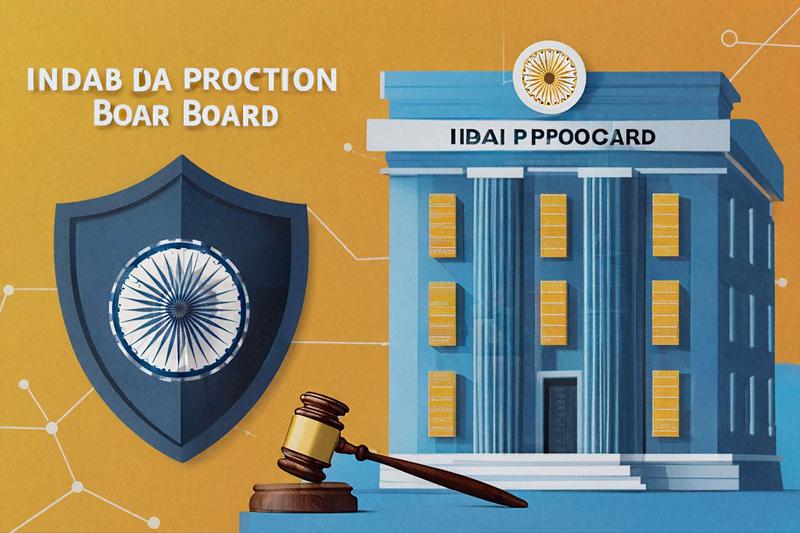
Most people got it wrong about India's Data Protection Board. I keep seeing takes — on LinkedIn, in policy newsletters, in tweets from lawyers who should probably know better — that frame the DPBI as some kind of privacy court, a place where citizens walk in with grievances and walk out with justice. That's not what this body is. Not really. And the gap between what people think it does and what it's actually built to do matters more than most of us realize.
The Digital Personal Data Protection Act of 2023 created the Data Protection Board of India, and on paper, it looks like a straightforward accountability mechanism. An organization mishandles your data, you complain, the Board investigates, maybe a penalty gets imposed. Simple enough. But the reality — the way this thing's been architected, funded, and positioned within the broader regulatory machinery — tells a different story. It's a story worth paying attention to, especially if you're someone who believes your personal data deserves some degree of protection in this country.
I want to be clear: I'm not saying the Board is useless. That'd be a lazy take. What I'm saying is that understanding its actual design helps you set realistic expectations, and maybe push for something better down the line.
What the Board Actually Is (and Isn't)
The DPBI isn't a regulator in the way most people understand that word. It doesn't write rules. It doesn't conduct inspections. It doesn't show up at a company's office and demand to see their data processing logs. The Board's function is adjudicatory — it sits and waits for complaints to come in, then decides whether a violation occurred and what penalty, if any, should follow. Think of it less like SEBI and more like a specialized tribunal with a narrow mandate.
That distinction might seem academic, but it changes everything about how the system works in practice. A regulator with investigative powers can go looking for problems. The DPBI can't, or at least the Act doesn't clearly give it that authority. It responds. It reacts. The burden of identifying a violation and bringing it forward rests almost entirely on you, the person whose data got mishandled.
Now, the Act does specify that the Board will function as a digital-first body. Hearings happen online. Filings are electronic. There's no physical courtroom you need to travel to, which honestly is a good design choice for a country this size. Someone in Imphal shouldn't have to fly to Delhi to complain about a data breach. The digital approach, in theory, lowers the access barrier. Whether the platform they build will actually be user-friendly — well, anyone who's used a government portal in India knows that's a coin flip.
The Board consists of a Chairperson and Members, all appointed by the Central Government. Their tenure is fixed, and they're eligible for reappointment. There's no requirement for judicial background, no mandatory consultation with Parliament or an independent selection committee. The government picks who it wants. I'll come back to why that's a problem.
The Complaint Pipeline
Here's how the process is supposed to work. You discover that some company — let's say a food delivery app — has been sharing your phone number and order history with third-party advertisers without your consent. Before you can approach the DPBI, you're required to first raise the issue directly with the company through its grievance mechanism or Consent Manager. Give them a chance to fix it. If they don't respond, or if their response is inadequate, then you can file a complaint with the Board.
This two-step process isn't unusual; consumer forums work similarly. But it does add friction. Most people won't bother escalating past the first stage. They'll send an email to the company's grievance officer, get a templated response that says "we take your privacy seriously," and give up. The companies know this. It's probably what they're counting on.
Assuming you do persist and file with the DPBI, the Board examines your complaint, asks the company to respond, and conducts proceedings — all online. If it finds a violation, it can direct the company to take corrective action and impose penalties. The maximum penalty under the Act goes up to Rs 250 crore, which sounds impressive until you realize that for a company like Meta or Amazon, that's barely a rounding error in their quarterly earnings. For a small Indian startup, though, it could be a death sentence. The one-size-fits-all penalty structure creates its own set of problems, which I suspect will surface once enforcement actually begins.
Appeals against Board decisions go to the Telecom Disputes Settlement and Appellate Tribunal (TDSAT). So if you lose at the DPBI, you've got another layer of proceedings to fight through. And if the company loses, they can tie things up in appeals for months. The whole pipeline, from initial complaint to final resolution, could easily stretch past a year. Maybe longer.
The Independence Question
This is the part that keeps privacy advocates up at night. The Central Government has sole authority over who sits on the Board. There's no involvement of the judiciary, no committee of experts, no parliamentary oversight of appointments. The government picks the Chairperson. The government picks the Members. The government sets their terms and conditions of service.
Why does that matter? Because the DPDP Act has a massive carve-out: the government can exempt any government agency from certain provisions of the Act in the interest of sovereignty, security, or public order. So the same government that might be processing your data through Aadhaar, CoWIN, DigiYatra, or any number of other programs is also the one choosing who will adjudicate complaints about government data handling. You don't need to be a cynic to see the tension there. You just need to be paying attention.
Retired Justice B.N. Srikrishna, who chaired the committee that drafted the original Personal Data Protection Bill back in 2018, has publicly criticized this aspect of the Act. His committee's version proposed a Data Protection Authority with regulatory teeth and an appointment process involving the Chief Justice of India. The final Act stripped all of that out. The Board that emerged is a lighter, more compliant version of what was originally envisioned — and critics like Srikrishna haven't been shy about saying so.
Civil society organizations, including the Internet Freedom Foundation and the Centre for Internet and Society, have flagged related concerns. If the Board isn't seen as truly independent, people won't trust it. And if people don't trust it, they won't use it. A complaint mechanism that nobody believes in is just decorative.
The Transparency Gap
There's another wrinkle that doesn't get enough attention. The Act doesn't require the Board to publish detailed reasoning for its decisions in the way that, say, the Supreme Court or even the Competition Commission of India does. It's unclear how much of the Board's proceedings and orders will be publicly accessible. Without transparency, there's no way for researchers, journalists, or other citizens to track patterns — like whether certain companies are repeat offenders, or whether government entities are getting treated differently from private ones.
This matters because precedent is how regulatory ecosystems mature. When SEBI issues an order, other market participants read it and adjust their behavior. When the CCI penalizes a company for anti-competitive conduct, it sends a signal. If the DPBI's decisions remain opaque, the deterrence effect gets diluted. Companies can't calibrate compliance against standards they can't see.
I'd argue — though reasonable people could disagree — that the transparency issue is actually a bigger threat to the Board's effectiveness than the independence question. Even an imperfect institution can build credibility over time through consistent, well-reasoned, publicly available decisions. But without that, you're flying blind.
Comparing with What Other Countries Built
It's worth looking at how other countries have structured their data protection authorities, because the contrast is instructive. The European Union's GDPR established independent supervisory authorities in each member state, with the power to conduct investigations, order audits, and impose penalties that have real bite — up to 4% of global annual turnover. Ireland's Data Protection Commission has fined Meta over a billion euros. The UK's Information Commissioner's Office has investigative staff who can show up at a company's office and examine data processing records. These bodies don't just wait for complaints. They go looking for problems.
India's DPBI has none of that investigative infrastructure, at least not as currently conceived. It's reactive by design. The EU model requires massive institutional capacity — hundreds of staff, technical expertise, legal resources — and India's Board is starting from scratch. Building that capacity takes years. Whether the political will exists to actually build it is an open question, and the early signals aren't encouraging. The government chose to create a lighter-touch body for a reason, and that reason likely has more to do with controlling the pace and direction of enforcement than with budget constraints.
Singapore's Personal Data Protection Commission offers a middle ground that India might have drawn from. It has both complaint-handling and investigation functions, can initiate inquiries on its own, and publishes detailed written decisions that have become a reference library for data protection practice in Southeast Asia. The transparency of Singapore's PDPC decisions has arguably done more for compliance than the penalties themselves, because companies can read the decisions and understand exactly where the lines are drawn.
India could still move in that direction. The DPDP Act gives the government power to make rules about the Board's procedures, and those rules could include transparency requirements, investigative authority, and structured publication of decisions. Whether they will is a different question. The fact that the Act itself doesn't mandate these things means they'd depend on executive goodwill, which isn't the strongest foundation for an institution that's supposed to hold the executive accountable.
Brazil's ANPD (National Data Protection Authority) is another relevant comparison. Created under the LGPD, Brazil's data protection law, the ANPD started as a body attached to the Presidency — raising similar independence concerns to India's DPBI. Over time, it transitioned to a more autonomous structure. Brazil's experience suggests that a data protection body can evolve toward independence, but only if the original legislation allows for it and if civil society keeps up sustained pressure. India's Act doesn't contain a built-in pathway to greater independence, which means any strengthening of the DPBI would require amending the legislation — a heavier lift than administrative rule-making.
The Staffing and Capacity Problem
There's a practical dimension that the legal analysis often glosses over. India has over 800 million internet users, tens of millions of businesses processing personal data, and a Board that — as of early 2026 — hasn't even finalized its operational rules. The volume of potential complaints is staggering. Every spam call, every data leak, every app that shares your data without clear consent could theoretically generate a complaint. Even if only a fraction of potential complaints are filed, the Board could face thousands of cases in its first year of operation.
How many members and staff will the Board have? The Act doesn't specify a minimum. What's the budget? Not publicly known. Where will the technical expertise come from — the ability to understand data processing architectures, evaluate consent mechanisms, and determine whether a breach was caused by negligence or by a sophisticated attack? These aren't questions with obvious answers, and the silence around them isn't reassuring.
The technical expertise question is particularly thorny. Data protection adjudication requires understanding concepts like data processing pipelines, consent architecture, encryption standards, and breach forensics. Appointing retired bureaucrats or generalist lawyers to the Board — which is what typically happens with government-appointed bodies — would leave it poorly equipped to evaluate the technical merits of the cases before it. The ideal Board member profile would combine legal acumen with technical literacy, someone who understands both the regulatory framework and the data processing realities of modern technology companies. Finding people who fit that profile and are willing to serve on a government body at government pay scales is a genuine challenge. Data protection authorities in Europe have addressed this by building large technical staff teams that support the commissioners, but that requires budget and institutional commitment that India's DPBI hasn't demonstrated yet.
Consumer courts in India already struggle with backlogs running into years. If the DPBI faces similar volume without adequate staffing, the same fate awaits. A right to complain means little if the complaint sits in a queue for eighteen months. The Board's credibility will be determined in its first year or two of operation by how quickly it can process cases and how clearly it communicates its reasoning. Stumble out of the gate, and public confidence may never recover.
What This Means If You're an Ordinary Person
Look, I've spent a lot of this piece pointing out problems, and I want to end on something more grounded. Because the DPBI, for all its flaws, is still something India didn't have before. There was no dedicated body where you could take a data privacy complaint. If a company leaked your Aadhaar number or sold your phone data to telemarketers, your options were basically limited to consumer courts (which are overwhelmed) or the IT Act's cybercrime provisions (which weren't designed for privacy complaints). The Board fills a real gap.
If you're going to use it — and I think you should, when the situation calls for it — there are some practical things to keep in mind. Start documenting everything now. Every consent popup you get, every data-sharing notification, every time an app asks for permissions that seem excessive. Take screenshots. Save emails. When the Board begins accepting complaints, the people with clear documentation will be in the strongest position.
Don't skip the first step of approaching the company directly. Yes, it's often a dead end, but having that paper trail — the complaint you sent, the inadequate response you received — strengthens your case at the Board level. Approach it like you're building a file, not just venting frustration.
And stay informed about how the Board develops. As of early 2026, the rules governing the Board's procedures are still being finalized. The quality of those rules will determine whether this is a body that actually helps people or one that mostly collects dust. Public consultation periods, when they happen, are your chance to push for stronger procedural protections — real transparency requirements, clearer timelines, accessibility standards for the complaint portal.
The DPBI probably won't be the privacy champion that activists hoped for, and it probably won't be the rubber stamp that critics fear. It'll likely end up somewhere in the messy middle, doing some good but limited by the constraints baked into its design. The question isn't whether it's perfect. It's whether it's useful enough to be worth engaging with. I think it is — but only if enough people actually engage with it to force it to earn the authority it's been given.
Written by
Priya SharmaSenior Privacy Analyst
Priya Sharma specializes in India's Digital Personal Data Protection Act (DPDPA) and helps organizations comply with data protection regulations. She holds a law degree from NLU Delhi and has published extensively on digital rights in India.
Related Posts
The Privacy Impact of India Stack and Digital Public Infrastructure
India Stack is brilliant engineering. It's also the most extensive personal data infrastructure any democracy has ever built. Holding both of those thoughts at once is where the interesting conversation starts.

The Privacy Risks of India's Smart City Projects
-- so you're telling me the government installed 15,000 cameras in my city, connected them to a centralized command center, and nobody asked whether residents were okay with being watched 24/7? Yeah. That's basically the situation in most of India's 100 smart cities.
The Role of CERT-In in Protecting India's Cyberspace
India's cyber incident response agency wields enormous power over how companies report breaches, store logs, and cooperate with investigations — yet most citizens have never heard of it. Here's what CERT-In actually does, where it falls short, and why its 2022 directives changed the rules for everyone.