The State of Internet Censorship in India: 2026 Report
India shut down the internet over 80 times in 2025. The economic damage crossed Rs 4,000 crore. And the government keeps calling these measures 'proportionate.' A skeptical look at where things stand in early 2026.
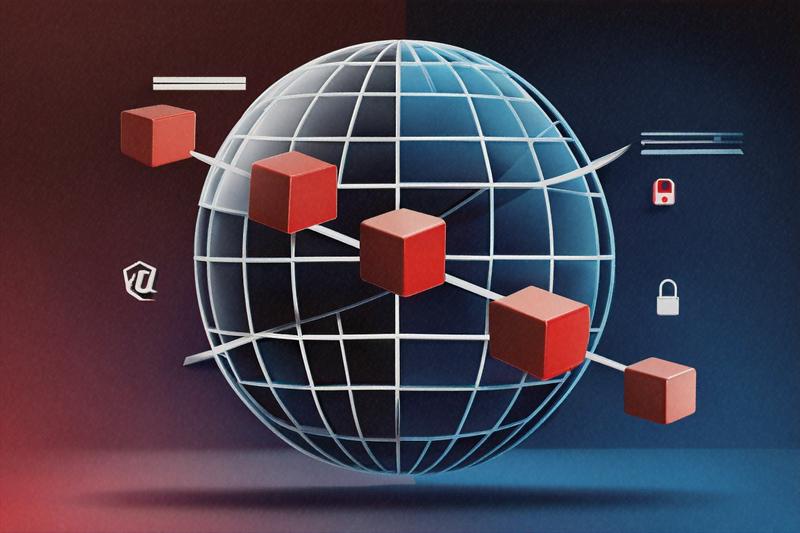
Eighty-four. That's the number of times the internet was shut down in India during 2025, according to the Software Freedom Law Centre's tracker. Eighty-four times some official — usually a district magistrate or a state home secretary — decided that a population's access to the internet should be cut off for hours or days. India has now held the global record for most internet shutdowns for eight consecutive years, and it's not even close. The next country on the list, Myanmar, managed roughly a third of India's count last year. Congratulations, I suppose.
The Normalization Problem
I bring up that number not because it's shocking — if you've been paying attention, it isn't — but because of how routinely it gets absorbed without pushback. Eighty-four shutdowns, affecting millions of people across Jammu and Kashmir, Manipur, Rajasthan, Haryana, and Punjab, and the collective public response is something close to a shrug. We've normalized it. The government orders a shutdown, telecom companies comply within minutes, affected residents lose connectivity for a day or three, and the rest of the country barely notices because it didn't happen in their state. That normalization is perhaps more concerning than the shutdowns themselves.
Legal Framework and Supreme Court Ruling
Two main provisions permit all this: Section 144 of the CrPC (now re-enacted under the Bharatiya Nagarik Suraksha Sanhita) and the Telecom Suspension Rules under the Indian Telegraph Act. A government official invokes public order or national security, issues an order to telecom operators, and the internet goes dark. In its 2020 Anuradha Bhasin v. Union of India ruling, the Supreme Court said shutdowns must be proportionate, time-bound, subject to review, and published. That ruling was supposed to be a turning point. Six years later, it's worth asking whether it actually changed anything.
Data suggests marginal improvement in some areas and no improvement in others. Average shutdown duration in 2025 dropped to around 30 hours, down from 48 hours a few years ago. That sounds better until you realize that 30 hours without internet in 2026 — when banking, healthcare, education, and employment all run online — is still enormously disruptive. Government officials frame the shift from blanket state-wide shutdowns to localized, district-level blackouts as progress, and technically it is. Fewer people are affected per incident. But the frequency has stayed steady, and the localized approach makes each shutdown less visible nationally, which might actually make reform harder to build momentum for.
Economic Toll and Human Cost
Beyond the rights question lies the economic toll. IFF estimated shutdown-related economic losses in 2025 at over Rs 4,000 crore — and that's almost certainly an undercount, because it's hard to quantify losses from missed telemedicine appointments, students who couldn't access exam prep materials, or freelancers who lost clients due to missed deadlines. A fruit seller in Srinagar using WhatsApp for orders doesn't file an economic loss report, but the loss is real.
Officials typically justify shutdowns by citing public order — preventing the spread of rumors that might incite violence, particularly during communal tensions, protests, or exam periods. Such reasoning might have seemed plausible a decade ago. In 2026, after years of evidence that shutdowns cause significant economic harm while doing little to actually prevent violence (studies by multiple researchers, including work published in the Journal of Peace Research, have found that shutdowns may actually increase certain types of violence by disrupting coordination among peace-keeping actors), the "proportionality" argument looks thinner every year. When the supposed cure has been shown to sometimes worsen the disease, you'd expect some recalibration. There hasn't been much.
Content Blocking and Section 69A
Content blocking is the other major dimension of internet censorship in India, and it operates in a fog. Section 69A of the IT Act gives the government the power to direct intermediaries — platforms, ISPs, app stores — to block access to specific content in the interest of sovereignty, security, public order, or morality. The orders issued under Section 69A are classified as confidential. You read that right. The government can order a website, app, or social media account blocked, and neither the affected party nor the public is entitled to an explanation. The order itself is secret.
We know the volume of blocking has increased because platforms partially disclose it. Twitter (now X) published government transparency reports showing a significant rise in legal demands from Indian authorities. Google's transparency report tells a similar story. Meta's data, to the extent it's made public, confirms the trend. In 2025, takedown requests to social media platforms reportedly rose by about 25% compared to the previous year. Several independent news outlets and YouTube channels were temporarily blocked during state elections and political protests. VPN services that didn't comply with CERT-In's 2022 directive on maintaining user logs faced blocking orders as well — a move that drew sharp criticism from digital rights groups, since VPNs are precisely the tools people use to circumvent censorship.
The secrecy around Section 69A orders creates an accountability vacuum that should bother anyone who cares about rule of law, regardless of their politics. When a blocking order is confidential, the blocked entity can't challenge it properly because they don't know the reasons behind it. The Bombay High Court examined this in the context of government-appointed fact-check units, and there have been constitutional challenges questioning whether secret censorship is compatible with Article 19(1)(a) — the right to free speech and expression. These cases are ongoing as of early 2026, and the outcomes will probably shape the censorship scene for the next decade. But legal challenges move slowly, and blocking orders move fast.
The pattern that emerges is one of infrastructure-level control over information flow. Shutdowns cut off access entirely at the network level. Section 69A blocks target specific content or platforms. The IT Intermediary Guidelines compel platforms to remove content on government demand within 36 hours. Taken individually, each of these tools might seem like a reasonable regulatory power. Taken together, they give the Indian government more control over what its citizens can see and say online than exists in most democracies. Whether you believe that level of control is necessary or excessive probably depends on how much you trust the judgment and restraint of whoever happens to be in power at any given time.
The Digital Economy Contradiction
I keep coming back to the economic angle because that's where the data is hardest to ignore. India wants to be a digital economy. Government programs actively promote Digital India, UPI, e-governance, online education, and telemedicine. India's tech industry contributes roughly 7 to 8 percent of GDP. And yet the same government routinely switches off the internet in regions where millions of people depend on it for their livelihoods. Nothing subtle about the contradiction. A country that's betting its economic future on digital infrastructure can't keep turning that infrastructure off when it's politically convenient. Or maybe it can — maybe the economic costs are considered acceptable collateral — but if so, that's a choice that deserves transparent public debate, not quiet administrative orders.
Accountability, Healthcare, and Human Impact
There's a less visible but equally concerning dimension: the effect of shutdowns on government accountability itself. During election periods, protests, or communal incidents — precisely the moments when independent information flow matters most — shutdowns create a vacuum that official narratives fill. When citizens can't share real-time photos and videos, the government's version of events goes unchallenged until connectivity is restored, by which point the news cycle has often moved on. Multiple instances in 2025 involved shutdowns during incidents where police conduct was questioned, and the inability of bystanders to upload footage in real time meant that official accounts went largely uncontested during the critical first hours. Whether this correlation between accountability-sensitive events and shutdown timing is coincidental or strategic is a question researchers continue to investigate, though the pattern is hard to ignore.
The psychological effect on populations that experience repeated shutdowns also deserves attention. In Kashmir, where long-duration shutdowns have been routine for years, researchers have documented widespread anxiety, isolation, and a learned helplessness around digital rights. A generation of young Kashmiris has grown up in an environment where the internet is something that gets taken away without warning and returned without explanation. That shapes a relationship with digital infrastructure — and with the state — that's completely different from the experience of a young person in Bangalore or Mumbai. The digital divide in India isn't just about who has access to the internet; it's about who can trust that their access won't be withdrawn without warning.
The healthcare impact is another dimension that rarely makes headlines. India has been heavily expanding telemedicine access since COVID, and organizations like eSanjeevani have facilitated millions of remote consultations. When the internet shuts down in a district, telemedicine stops. Patients who rely on remote follow-ups with specialists in other cities lose that lifeline. Chronic disease management programs that depend on regular digital check-ins get interrupted. Prescription refills ordered through e-pharmacy apps don't go through. In rural areas where telemedicine may be the only realistic access to specialist care, a shutdown isn't just an inconvenience — it's a potential health risk. Nobody tracks "missed medical consultations due to internet shutdowns" as a metric, but the number is certainly not zero.
Small businesses in the gig economy bear a particularly acute burden. A delivery driver for Zomato or Swiggy who depends on a functioning internet connection for every order simply cannot work during a shutdown. Uber and Ola drivers can't accept rides. Freelance graphic designers on Fiverr can't deliver work or respond to clients. Employing an estimated 7 to 8 million Indians as of 2025, with numbers growing, the gig economy runs entirely on continuous connectivity. Such workers have no fallback, no paid leave, and no compensation for lost earnings during shutdowns. They're the most digitally dependent and the least politically powerful, which makes them particularly vulnerable to a policy tool that trades their livelihoods for a security outcome that hasn't been convincingly demonstrated.
Education has been hit particularly hard in shutdown-affected regions. With the push toward online learning — accelerated by COVID but continuing well into 2026 — students in shutdown-prone areas face a structural disadvantage that compounds over time. College students in Srinagar who lose internet access for three days during exam preparation aren't just inconvenienced; they're academically disadvantaged relative to peers in Bangalore or Pune who never experience such disruptions. High school students preparing for JEE or NEET through online coaching platforms lose access to lectures, study materials, and practice tests during every shutdown. Multiply that across dozens of shutdowns over a student's educational career, and the cumulative impact on human capital in these regions is significant, though difficult to quantify precisely.
On the press freedom front, the effects are immediate and measurable. When the internet goes down in Manipur or Kashmir, journalists on the ground can't file reports, upload photos, or livestream events. The public gets its information from official statements and whatever filters out through people who drive to areas with connectivity. That's not journalism. It's a controlled information environment, and it erodes the kind of real-time accountability that makes democratic governance possible. Reporters Without Borders has flagged India's declining press freedom ranking repeatedly, and internet shutdowns are a significant contributing factor.What Citizens Can Do
For ordinary citizens — not journalists or activists, just people trying to live their lives — the experience of an internet shutdown in 2026 is profoundly disruptive in ways that weren't true ten years ago. Your UPI payments stop working. You can't check your bank balance. Your child can't attend their online tutoring session. You can't refill a prescription through an e-pharmacy app. You can't contact family members outside the affected area except by voice call, assuming mobile networks aren't also throttled (and they often are — shutdowns frequently include mobile data, sometimes even voice). The government's digitization drive has made the internet a dependency, and then the government switches it off. The irony writes itself.
What can individual citizens actually do about this? Less than you'd hope, honestly. The legal avenues exist but they're slow. You can support organizations like the Internet Freedom Foundation and the Software Freedom Law Centre — both do good work tracking shutdowns, filing legal challenges, and pushing for policy reform. IFF's "Internet Shutdown Tracker" is one of the few reliable data sources on the subject. SFLC's legal interventions have occasionally resulted in courts ordering faster restoration of services. But these organizations are small, underfunded relative to the scale of the problem, and up against a government that views internet control as a security prerogative, not a rights issue.
There's a technical dimension too. During shutdowns, some people use VPNs, satellite internet services (Starlink's India plans remain uncertain as of early 2026), or mesh networking tools to maintain connectivity. These workarounds are partial at best — they don't restore UPI or government services that require domestic internet routing — and the government's regulatory push against non-compliant VPN providers suggests it's aware of and hostile to circumvention tools.
Engaging with elected representatives matters in theory, though the track record is discouraging. Internet shutdowns don't generate the kind of political pressure that changes behavior, largely because they're concentrated in regions that already have limited political clout (Kashmir, northeast states) or are brief enough in other states that public anger dissipates before it can organize. The people most affected by shutdowns are often the least able to mobilize against them — a feature of the system, one suspects, not a bug.
Where We Are in 2026
Where does this leave us? India enters 2026 with more internet users than ever, more economic activity dependent on digital infrastructure than ever, and a censorship apparatus that shows no signs of shrinking. Courts offer the most promising avenue for structural change, but judicial timelines are measured in years, not months. Public opinion might shift if shutdowns start affecting larger urban populations more frequently — though I'm skeptical that outrage in Delhi or Mumbai would necessarily translate into restraint in Srinagar or Imphal.
A deeper question — one without a clean answer — is whether a country can simultaneously position itself as a global digital leader and maintain one of the world's most aggressive internet restriction regimes. Officials seem to believe these two things are compatible, that you can build a trillion-dollar digital economy on infrastructure you periodically shut off. Maybe they're right, in the narrow sense that economic growth can coexist with regional information blackouts. But at what cost to democratic norms, to the trust of citizens in their own government's commitment to connectivity, to India's reputation in the eyes of international businesses deciding where to invest? No one in power seems interested in answering that question, which is maybe the most telling data point in this entire report. And so the shutdowns continue, the numbers climb, and the country that wants to digitize everything keeps reaching for the off switch when the digital gets inconvenient.
Written by
Sneha ReddyDigital Rights Advocate
Sneha Reddy is a digital rights advocate focused on internet freedom and surveillance in India. She works at the intersection of technology and policy, helping citizens understand their digital rights under Indian law.
Related Posts
World Down Syndrome Day and Digital Accessibility: Inclusive Privacy
I've been thinking about who gets left out when we design privacy tools and consent systems. On World Down Syndrome Day, that question feels more pressing than usual.

Right to Be Forgotten: Does India Recognize It?
Something you did ten years ago still shows up on Google when someone searches your name. Should you have the right to make it disappear? India's answer is complicated, evolving, and worth understanding.
Workplace Surveillance Laws in India: Employee Privacy Rights
Your boss might be watching your screen right now. No, really. Since the work-from-home boom, Indian companies have quietly installed keystroke loggers, screenshot tools, and GPS trackers on employee devices. The law on whether any of this is legal? It's a mess.