DPDPA Compliance Checklist for Indian Startups
Most Indian startups are already violating the DPDPA and don't even know it. The consent banners are wrong, the data maps don't exist, and the clock is ticking toward penalties that could shut a company down.
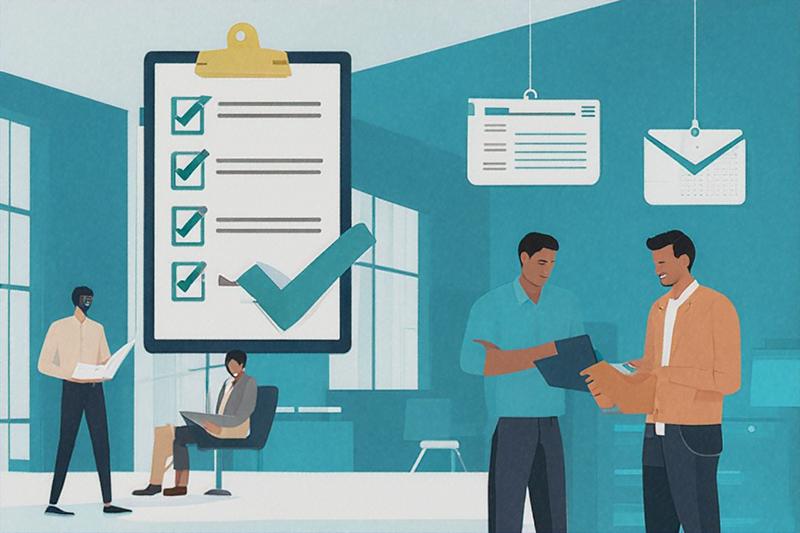
Most startups will get this wrong. Not out of malice -- just inertia, tight budgets, and the very human tendency to treat legal compliance as tomorrow's problem. The Digital Personal Data Protection Act passed in 2023, the rules have been trickling out since, and a surprising number of seed-stage and Series A companies I've talked to still think it doesn't apply to them because they're "too small." It does. There's no size exemption. If you're processing personal data of people in India, you're a Data Fiduciary under the Act, whether you've got five users or five million.
The penalty ceiling is Rs 250 crore. For a startup burning through a Rs 3 crore seed round, that number is abstract to the point of meaninglessness -- it's like warning someone about a meteor strike. But the Data Protection Board doesn't have to go to the maximum. Even a Rs 10-25 lakh penalty, combined with the reputational damage and the legal costs of defending a complaint, can break an early-stage company. And that's before we get into the fact that enterprise customers and investors are starting to ask for DPDPA compliance documentation during due diligence. A Y Combinator-backed fintech I know lost a pilot with a large bank in Q4 2025 specifically because they couldn't demonstrate a proper consent mechanism.
...Which Brings Us to the Actual Checklist
I've been helping three startups in the Bangalore ecosystem think through this, and what follows is more or less what I've been telling them. It's not legal advice -- hire a lawyer for that -- but it's a practical starting point that'll get you from "we haven't even thought about it" to "we probably won't get fined next quarter."
Data Mapping: You Can't Protect What You Can't Find
Before anything else, you need to know what personal data you're collecting, where it lives, and why you have it. This sounds basic. It isn't. Most startups I've worked with can't answer these questions accurately because data collection happens ad hoc -- a developer adds a phone number field to a form, someone starts logging IP addresses for analytics, a third-party SDK phones home with device identifiers nobody realized it was collecting.
Sit down with your engineering team and trace the data flow. Start from the user-facing touchpoints -- sign-up forms, payment flows, customer support channels -- and follow the data through your stack. Where does it land? A PostgreSQL database on AWS Mumbai? A Google Sheet that your sales intern uses? A Mixpanel instance that sends data to US servers? Write it all down. Every field, every storage location, every third party that touches it.
The output should be a simple spreadsheet. Columns for: data category (name, email, phone, Aadhaar, location, etc.), collection point, storage location, purpose, retention period, who has access, and whether it's shared externally. It doesn't need to be fancy. It needs to be honest.
One thing that catches startups off guard: the DPDPA's definition of "personal data" is broad. It's any data about an individual who's identifiable by or in relation to that data. Device IDs, IP addresses, cookie identifiers -- these all probably qualify. If your analytics setup assigns a persistent identifier to a user and tracks their behavior over time, that's personal data processing.
Consent: The Part Everyone Gets Wrong
The DPDPA requires free, specific, informed, unconditional, and unambiguous consent. Let me translate that into what it means for your product.
Free means the user can't be forced into consenting. You can't make account creation contingent on agreeing to marketing emails. If the data processing isn't necessary for providing the service, you need separate consent for it.
Specific means you need to tell the user exactly what you're doing with their data. "We may use your data for improving our services and those of our partners" is not specific. "We'll use your email to send you order updates" is.
Informed means the consent notice has to be in plain language. The Act says it should be in English or any of the 22 languages in the Eighth Schedule. If your users are primarily Hindi-speaking, a consent notice only in English is going to be a problem.
Here's what a compliant consent flow looks like in practice: before collecting personal data, you present a clear notice explaining what data you're collecting, why, and who you might share it with. The user actively opts in -- no pre-ticked boxes, no "by continuing you agree" buried in paragraph 47 of your terms. They should be able to withdraw consent just as easily as they gave it, which means you need an actual mechanism for that, not just a sentence in your privacy policy saying "email us to withdraw consent."
For users under 18, you need verifiable parental consent. The Act doesn't specify exactly how to verify this (the rules may clarify), but "checking a box that says I'm over 18" almost certainly won't cut it. If your product has a significant user base of minors -- and many EdTech, gaming, and social apps do -- this is going to require real engineering work.
Privacy Policy: Rewrite Yours from Scratch
If your current privacy policy is a template you found on the internet and filled in your company name, start over. The DPDPA requires that your privacy policy include specific information: the types of personal data collected, the purpose of processing, how users can exercise their rights, the grievance redressal mechanism, and details about cross-border data transfers.
Make it readable. Seriously. I've seen startup privacy policies that are 14,000 words of legalese that not even the founders have read. A good privacy policy is clear, honest, and organized by topic so users can actually find the information they need. Two to three thousand words is usually enough. Include the name and contact details of your grievance officer (more on that below).
Data Protection Officer and Grievance Officer
If the government classifies your startup as a "Significant Data Fiduciary" -- the criteria haven't been fully detailed yet, but it'll likely include thresholds based on data volume, sensitivity, and risk -- you'll need to appoint a Data Protection Officer based in India. They'll be your point of contact with the Data Protection Board and responsible for overseeing compliance.
Even if you're not classified as Significant, the DPDPA requires every Data Fiduciary to have a grievance redressal mechanism. Someone in your organization needs to be the named contact for data-related complaints, and they need to respond within a reasonable timeframe. Don't make this an unmonitored inbox. The Data Protection Board will take a dim view of complaints that went unanswered for months.
Data Minimization: Collect Less, Sleep Better
This is maybe the most practical piece of advice in this entire article. Collect only the data you actually need for a clearly defined purpose. If you're running a food delivery app, you need the delivery address and phone number. You probably don't need the user's date of birth, gender, and Aadhaar number. Every piece of data you don't collect is data you can't breach, data you don't have to protect, and data that can't show up in a complaint to the Board.
Go through your data map and ask, for each field: do we genuinely need this? If the answer is "we might need it someday" or "our analytics person wanted it" or "the form template had that field," remove it. The DPDPA's purpose limitation principle says you can only process data for the stated purpose. If you collected an email address for order confirmations, you can't quietly add it to a marketing list without separate consent.
Breach Notification: Plan for the Worst
The DPDPA requires Data Fiduciaries to notify the Data Protection Board and affected individuals in the event of a personal data breach. The Act doesn't specify an exact timeline (the rules will), but "without unreasonable delay" is the standard. GDPR, which the DPDPA borrows from heavily, uses a 72-hour window. Plan for something similar.
What does "plan for it" mean concretely? You need an incident response playbook. Who gets notified internally when a breach is detected? Who makes the call to report to the Board? What's the template for the notification to affected users? How do you assess the scope of the breach quickly enough to make accurate disclosures? If you're scrambling to figure all this out while actively dealing with a breach, you're going to make mistakes -- and those mistakes will compound the penalties.
Run a tabletop exercise. Pick a hypothetical breach scenario -- say, an exposed MongoDB instance leaking customer records -- and walk through your response step by step. You'll find the gaps in your process fast.
Cross-Border Data Transfers
The DPDPA allows the government to restrict data transfers to specific countries through a "negative list" approach. Transfers are permitted unless the destination country is specifically blacklisted. As of early 2026, no negative list has been published, so technically transfers to any country are allowed. But this could change at any time.
If your startup uses AWS, GCP, or Azure with regions outside India, or if your SaaS tools (Intercom, HubSpot, Mixpanel, etc.) process data on overseas servers, document these transfers. Know where your data goes. When the rules on cross-border transfers are finalized, you'll need to demonstrate that you've assessed and managed the risks. Some startups are preemptively moving to India-region hosting for primary data stores. That's probably overkill right now, but it's not a bad idea if the cost difference is marginal.
Vendor and Third-Party Management
Under the DPDPA, you're responsible for what your data processors do with the personal data you share with them. That means your contracts with vendors -- cloud providers, payment gateways, CRM tools, analytics platforms -- need to include data protection clauses. Specifically: what data they'll process, for what purpose, what security measures they'll implement, how they'll notify you of breaches, and what happens to the data when the contract ends.
Most large vendors (AWS, Razorpay, etc.) already offer Data Processing Agreements that are broadly compatible with global privacy laws. Ask for them. Read them. For smaller vendors -- that WhatsApp Business API provider, that bulk SMS gateway -- you may need to push for specific contractual protections. If a vendor won't commit to data protection terms in writing, that's a red flag.
Security Safeguards
The DPDPA requires "reasonable security safeguards." It doesn't define what "reasonable" means, which is both frustrating and flexible. At minimum, you should have:
- Encryption for personal data at rest and in transit (TLS 1.2+ for transit, AES-256 for storage)
- Access controls based on least privilege -- not everyone in the company needs access to the production database
- Multi-factor authentication for all internal tools that handle personal data
- Regular dependency updates and vulnerability scanning
- Audit logs for data access and modifications
- A documented security policy that employees actually read and follow
If you're a four-person startup, you don't need a SOC 2 certification tomorrow. But you do need to demonstrate that you've thought about security systematically. The Board will look at the size and resources of your organization when assessing what's "reasonable." A one-person side project won't be held to the same standard as a funded SaaS company. But "we're a startup, we move fast" isn't a defense.
Common Mistakes I Keep Seeing
The most frequent one: treating the privacy policy as the entirety of compliance. You wrote a policy, you put it on your website, done. No. The policy is documentation. Compliance is the underlying practices, systems, and processes that the policy describes. If your policy says "we delete data upon request within 30 days" but you have no actual mechanism to process deletion requests, you're non-compliant -- and the policy is evidence against you.
Second mistake: ignoring legacy data. You've been collecting user data for three years before the DPDPA. That data doesn't get a free pass. You need lawful basis for processing all the personal data you hold, including historical data. If you collected emails without proper consent under the old regime, you may need to re-obtain consent or delete that data.
Third: assuming compliance is a one-time exercise. It isn't. New features collect new data. New vendors process data differently. The regulatory picture is evolving as rules and guidelines are published. You need a process for ongoing compliance -- a quarterly review, at minimum, where someone audits what data you're collecting, whether your consent mechanisms still match your actual practices, and whether any new risks have emerged.
What This Actually Costs
Founders always want to know this, so: for a typical seed-stage startup, you're looking at maybe Rs 2-5 lakh for initial compliance work if you use a consultant or law firm. That covers a data audit, consent mechanism review, privacy policy drafting, and basic process documentation. Ongoing costs are lower -- maybe Rs 50,000 to Rs 1 lakh per quarter for reviews and updates. Some startups do it in-house if they have a legally savvy co-founder, which brings the cash cost close to zero but still takes significant time.
Compare that to the alternative. A single complaint to the Data Protection Board that results in an investigation will cost you more in legal fees, management time, and distraction than a year's worth of compliance work. And that's before any penalty.
There's also a hidden cost of non-compliance that founders rarely think about: investor due diligence. I've watched two fundraising rounds get complicated in 2025 because the target company couldn't produce a data map or demonstrate a working consent mechanism. One Series A investor I spoke to said they now include a "DPDPA readiness" section in their due diligence checklist, right alongside financial audits and IP assessments. Doing the compliance work early isn't just about avoiding penalties -- it's about not tripping over a preventable obstacle when you're trying to raise your next round. The Rs 3-5 lakh you spend now on getting compliant will look trivial next to the valuation hit of a delayed or collapsed funding round.
Getting Started This Week
If you've read this far and your startup hasn't started on DPDPA compliance, here's a realistic plan for the next five business days. Day one and two: do the data mapping exercise. Day three: review your consent flows and compare them against what the Act requires. Day four: read your current privacy policy with fresh eyes and mark everything that needs updating. Day five: assign an owner for ongoing compliance -- someone who'll be the internal point person and eventual contact for the Data Protection Board.
That won't make you fully compliant. But it'll give you a foundation, a clear picture of where the gaps are, and a person responsible for closing them. Which reminds me -- I keep meaning to write about how the DPDPA interacts with sector-specific regulations, like RBI's data localization rules for payment data or IRDAI's guidelines on insurance data. That's a whole separate mess. The overlap between the DPDPA and existing sectoral rules is going to create real headaches for startups operating in regulated industries, and honestly nobody I've talked to has fully figured out how the two frameworks fit together yet...
Written by
Priya SharmaSenior Privacy Analyst
Priya Sharma specializes in India's Digital Personal Data Protection Act (DPDPA) and helps organizations comply with data protection regulations. She holds a law degree from NLU Delhi and has published extensively on digital rights in India.
Related Posts

Children's Online Privacy: What DPDPA Says About Minors' Data
A ten-year-old in Pune opens a gaming app and taps 'I agree' without reading a word. India's DPDPA 2023 says that shouldn't count as consent. But does the law actually protect kids, or does it just look good on paper?
Monthly Privacy Roundup: Key Updates from February 2026
February 2026 was a busy month for privacy in India — a fintech breach exposed 2.3 million records, the Data Protection Board got its full bench, and UPI fraud numbers got worse. Here's what happened.

Right to Be Forgotten: Does India Recognize It?
Something you did ten years ago still shows up on Google when someone searches your name. Should you have the right to make it disappear? India's answer is complicated, evolving, and worth understanding.