Cryptocurrency Privacy and Tax Implications in India
India slaps a flat 30% tax on crypto gains with zero deductions, while exchanges hand over your KYC data on request. Here's a Q&A breakdown of what crypto privacy actually looks like in this country, where the tax math stands, and what you can (and can't) do about it.
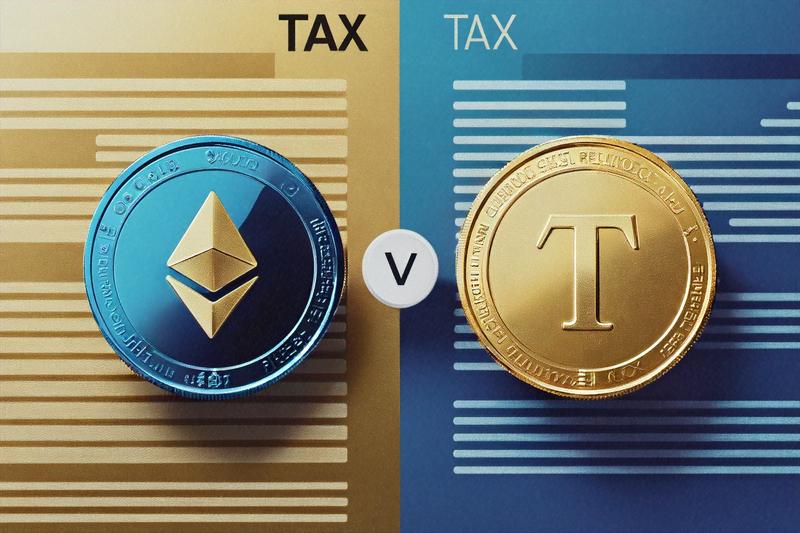
Somewhere around 25 to 30 million Indians hold cryptocurrency as of late 2025. That's the rough estimate from industry groups, though the real number is likely higher because plenty of people trade through international exchanges or peer-to-peer channels that don't show up in domestic figures. Whatever the exact count, it's a lot of people operating in a regulatory environment that treats every transaction as both a tax event and, at some level, a suspicious activity. The gap between what crypto was supposed to be — private, decentralized, beyond government reach — and what it actually is in India is wide enough to drive a truck through.
This post is structured as a Q&A because the questions people ask about crypto privacy and taxes in India tend to be very specific, and the answers don't fit neatly into a narrative. Some of these questions have clear answers. Others, honestly, don't.
Q: How does India tax cryptocurrency right now?
A: The framework has been in place since the 2022 Union Budget, with some tweaks since then. Here's the short version. Any gain you make from transferring a "Virtual Digital Asset" — which includes Bitcoin, Ethereum, NFTs, and basically every token you can think of — gets taxed at a flat 30%. That's 30% of your profit, with the only deduction allowed being your cost of acquisition. You can't deduct transaction fees, exchange commissions, or gas costs. You can't deduct electricity if you mined the coins. Just the purchase price, nothing else.
On top of that, there's a 1% TDS (Tax Deducted at Source) on every crypto transaction over INR 10,000. For specified persons — basically, individuals whose income doesn't exceed certain thresholds — the limit is INR 50,000. The exchange deducts this automatically before you receive your proceeds. You can claim TDS credit when filing your return, but it ties up your capital in the meantime.
Here's the part that really stings: no loss set-off. If you make a profit on Bitcoin and a loss on Ethereum in the same year, you can't offset one against the other. Each asset is treated independently. And you can't carry forward crypto losses to future years either. The government designed this tax structure to be punitively simple. Whether that discourages speculation or just drives people to trade through less traceable channels is a question worth sitting with.
Q: What about receiving crypto as a gift?
A: If someone gifts you cryptocurrency and its market value exceeds INR 50,000, it's taxable income for you, the recipient. The gifter doesn't pay any tax on the transfer. But when you later sell that gifted crypto, the cost of acquisition is treated as zero if you can't establish what the original buyer paid. That means you'd owe 30% on the entire sale price, not just the gain. Maintaining proper documentation of how you acquired your crypto — including gifts — is something people tend to ignore until tax season arrives and the math turns ugly.
Q: Is Bitcoin actually private?
A: No, not really. Bitcoin is pseudonymous, which is a word that sounds impressive but means less than people think. Every Bitcoin transaction is permanently recorded on a public blockchain. Anyone can look at it. Your wallet address isn't directly tied to your name, but the moment you use a KYC-compliant exchange to buy or sell — which is the standard route in India — your identity gets linked to that address. From there, chain analysis firms can follow your money forward and backward through every transaction you've ever made with that wallet.
Indian law enforcement has invested in blockchain analytics tools from companies like Chainalysis and CipherTrace. The Enforcement Directorate used these during the WazirX investigation in 2024, and the FIU (Financial Intelligence Unit) reportedly has access to similar technology. So if you're buying Bitcoin on CoinDCX, transferring to a personal wallet, and then doing something you'd rather keep quiet, the chain of transactions is traceable. Maybe not by your neighbor, but certainly by any agency with the right software and a reason to look.
Q: What about privacy coins like Monero and Zcash?
A: Monero uses ring signatures, stealth addresses, and confidential transactions to make it genuinely difficult to trace who sent what to whom. Zcash offers optional shielded transactions using zero-knowledge proofs. On a technical level, these coins do provide stronger privacy than Bitcoin or Ethereum.
The practical problem in India is that you can't easily buy or sell them through domestic exchanges. Most Indian platforms delisted privacy coins in 2023 and 2024 under pressure from regulators. WazirX removed Monero, Zcash, and Dash. CoinDCX did the same. If you want to acquire privacy coins, you'd need to use an international exchange — which creates its own compliance headaches, since Indian residents are supposed to use FIU-registered platforms — or find someone willing to trade peer-to-peer.
There's also the legal ambiguity. India hasn't specifically banned privacy coins, but the regulatory direction suggests they're viewed with deep suspicion. Using them doesn't automatically make you a criminal, but it might draw exactly the kind of attention you were trying to avoid. Whether that's fair or not is a separate debate entirely.
Q: How much does the KYC process on Indian exchanges actually expose?
A: Quite a lot. To register on any FIU-compliant Indian exchange — WazirX, CoinDCX, CoinSwitch, ZebPay, and so on — you'll typically submit your PAN card, Aadhaar (or other government ID), a selfie, and proof of address. Some platforms also pull data from your bank account for verification. All of this sits in the exchange's database, often alongside your complete transaction history.
The privacy exposure comes from multiple directions. The exchange itself has a detailed profile of your financial activity. Government agencies — the FIU, the Income Tax Department, the ED — can request this data, and the exchange is legally obligated to hand it over. There's no requirement to notify you when this happens. And then there's the breach risk. Indian crypto exchanges haven't had a spotless security record. The WazirX hack in mid-2024, where roughly $230 million in user funds were stolen, is the most dramatic example. But smaller data exposures and security incidents have affected other platforms too. Your KYC documents, transaction records, and wallet addresses sitting in a database that gets breached — that's a privacy disaster of a different magnitude than just having your email leaked.
Q: What's the RBI's current stance on crypto?
A: Cautious to hostile, depending on who's speaking. The RBI has repeatedly expressed concerns about cryptocurrency, with former governor Shaktikanta Das calling it a threat to financial stability on multiple occasions. The central bank attempted an outright ban on banks dealing with crypto entities in 2018, which the Supreme Court overturned in 2020. Since then, the approach has been more indirect: the punitive tax regime, the TDS requirement, and periodic statements suggesting that crypto isn't welcomed but isn't (currently) banned.
The RBI's own digital rupee (e-CBDC) pilot, which has been running since late 2022, is partly motivated by offering a government-backed digital currency alternative. It's worth noting that CBDCs sit on the opposite end of the privacy spectrum from decentralized crypto — every transaction is tracked by the central bank. As of early 2026, the digital rupee pilot hasn't gained much traction with the public, but the RBI hasn't abandoned the effort either.
Q: Can blockchain analysis tools really trace my transactions?
A: For Bitcoin and Ethereum, yes, with high accuracy. Chainalysis, Elliptic, and CipherTrace maintain databases that cluster wallet addresses, identify exchange deposit and withdrawal patterns, and trace the flow of funds across the blockchain. They can often identify the real-world entity behind a wallet address even when the user hasn't directly interacted with a KYC exchange, by analyzing patterns of transactions, timing, and known address clusters.
For Monero, these tools are significantly less effective. Chainalysis has claimed some ability to trace Monero transactions, but researchers have disputed the reliability of those claims. Zcash's shielded transactions are similarly resistant, though unshielded Zcash transactions (which many users default to) are as transparent as Bitcoin.
The broader point is this: unless you're using a privacy coin with full shielding, you should assume your blockchain activity is traceable by a sufficiently motivated and well-resourced actor. Indian agencies are increasingly becoming that actor.
Q: What about P2P trading for privacy?
A: Peer-to-peer trading — buying and selling crypto directly with another person, outside an exchange's order book — does avoid some of the data exposure that comes with centralized platforms. Platforms like Paxful (before it shut down) and LocalBitcoins (also shut down) used to help with this, and some current exchanges have P2P sections.
But P2P trading in India has its own problems. Tax compliance becomes harder because there's no automatic TDS deduction — you're responsible for withholding and remitting the 1% yourself. If you're trading for cash or through informal channels, there's no paper trail, which might seem like a privacy win until the Income Tax Department asks you to explain the source of funds during an assessment. Undisclosed crypto holdings discovered during a tax investigation can lead to penalties of up to 70% of the tax owed, plus prosecution in some cases.
There's also the counterparty risk. P2P crypto trades in India have been connected to money laundering and fraud cases. If the person you're trading with is using dirty money, you could find your bank account frozen while investigators sort things out. That's happened to enough people that it's not a theoretical risk anymore.
Q: Are mixing services and tumblers legal in India?
A: This is genuinely murky. Mixing services take crypto from multiple users, jumble it together, and redistribute it to make the original source of funds harder to trace. They're not directly illegal in India. There's no law that says "you cannot use a Bitcoin mixer." But the Prevention of Money Laundering Act (PMLA) criminalizes activities that obscure the trail of proceeds of crime. If you're using a mixer for legitimate privacy reasons but the mixer is also being used by bad actors, the co-mingling of your funds with potentially illicit funds creates a problem.
International precedent isn't encouraging either. The U.S. sanctioned Tornado Cash (an Ethereum mixer) in 2022, and its developer was convicted in 2024. While Indian courts haven't addressed the question directly, PMLA proceedings could probably be initiated against someone who used mixing services if the government wanted to make an example. The risk-to-reward ratio here doesn't seem great, though I should admit I'm not certain how Indian courts would actually rule on this. Nobody is, because it hasn't been tested.
Q: What should I actually be doing as a crypto user in India who cares about both privacy and not going to jail?
A: Here's where the honest answer gets uncomfortable: the overlap between "maximum privacy" and "full legal compliance" in India's current framework is pretty narrow. But there are reasonable things you can do.
Use a reputable exchange with strong security practices for your on-ramp and off-ramp (converting rupees to crypto and back). Enable every security feature the platform offers — two-factor authentication with an authenticator app (not SMS), withdrawal address whitelisting, login alerts. Once you've bought your crypto, move it to a hardware wallet like a Ledger or Trezor. This reduces the amount of data the exchange holds about your current holdings.
Keep meticulous records of every transaction — date, amount, counterparty, purpose. Not just for taxes, but because having clear documentation is your best defense if you're ever questioned. File your taxes honestly. Yes, 30% hurts. But 30% plus penalties plus prosecution hurts considerably more.
Use a dedicated email address for exchange accounts, not your primary one. Don't reuse passwords across platforms. Consider using a paid VPN when accessing exchanges — not because it hides you from the exchange (they already have your KYC) but because it prevents your ISP from logging your exchange activity and building a profile of when and how often you trade.
And stay informed, because this space changes fast. RBI policy could shift with the new governor. The DPDP Act's rules might eventually address crypto data handling more specifically. Tax rates could change — there's been periodic lobbying to reduce the 30% rate to something less punishing, though nothing concrete has materialized as of early 2026.
Q: What about DeFi protocols? Are they more private than centralized exchanges?
A: Decentralized finance protocols — Uniswap, Aave, Compound, PancakeSwap, and others — don't require KYC to use. You connect your wallet, execute a transaction on the blockchain, and that's it. No one checks your identity. In that sense, they're more private than CoinDCX or WazirX, where you've handed over your PAN and Aadhaar.
But there are important caveats. First, every transaction you make on a DeFi protocol is still recorded on the blockchain. If your wallet address is linked to your identity through a previous centralized exchange transaction (which it probably is, if you bought your initial crypto through an Indian exchange), your DeFi activity is traceable. Second, many DeFi front-ends — the websites you use to interact with the protocols — log IP addresses and may use analytics trackers. Using Uniswap's website isn't the same as interacting directly with the smart contract; the website layer adds surveillance that the protocol itself doesn't have.
Third, and this is India-specific: converting DeFi gains back into rupees almost always requires going through a centralized, KYC-compliant exchange. You can make money in DeFi pseudonymously, but getting that money into your bank account creates a trail. The Income Tax Department can and does ask "where did this crypto come from?" during assessments, and "I used a decentralized protocol" isn't an answer that will satisfy them without transaction documentation.
Q: Are NFTs subject to the same tax and privacy rules?
A: Yes. NFTs are classified as Virtual Digital Assets under Indian tax law, so the same 30% flat tax and 1% TDS apply. Selling an NFT for a profit triggers the same obligations as selling Bitcoin. The privacy considerations are similar too — NFT transactions on Ethereum and other blockchains are public, and if your wallet is linked to your identity, your NFT purchases and sales are traceable.
There's an additional privacy dimension with NFTs that doesn't apply to fungible tokens: the NFTs themselves can be public signals about your identity and interests. If you buy an NFT from a particular collection, that purchase is visible on the blockchain and through platforms like OpenSea. Your wallet becomes a publicly viewable collection of digital assets that reveals something about your taste, spending habits, and community affiliations. Whether that matters depends on how much you care about that information being public, but it's worth being aware of.
If I'm being candid, I don't know where Indian crypto regulation is heading. The government seems caught between wanting to tax the activity (which implies acceptance), wanting to discourage it (which implies opposition), and being unable to stop it (which implies pragmatism). Privacy in this space is likely to keep shrinking as analytics tools improve and regulatory reporting expands. Whether that's an acceptable trade-off for participation in the crypto economy is something each person has to decide for themselves, and I'm not sure anyone — regulators included — has fully thought through where this all ends up.
Written by
Priya SharmaSenior Privacy Analyst
Priya Sharma specializes in India's Digital Personal Data Protection Act (DPDPA) and helps organizations comply with data protection regulations. She holds a law degree from NLU Delhi and has published extensively on digital rights in India.
Related Posts
Indian Banking Trojans: Protecting Your Financial Apps
Someone asked me last week: 'Can a virus actually steal money from my phone?' The short answer is yes. Banking trojans designed specifically for Indian UPI and banking apps are more common than most people realise.
KYC Data Privacy: What Banks Can and Cannot Do
You handed your Aadhaar, PAN, and address proof to a bank. Now what can they do with it? A flat-toned walkthrough of what's allowed, what's not, and the gray zones nobody clarifies.

Phishing Attacks Targeting Indian UPI Users: How to Identify Them
A single tap on a fake payment link cost a Chennai shopkeeper his entire month's earnings. UPI phishing scams are bleeding Indian wallets dry through bogus SMS blasts, spoofed Google Ads, and WhatsApp traps. Here's how to spot them before your money vanishes.