Complete Guide to iPhone Privacy Settings for Indian Users
You probably spent 70,000 rupees or more on that iPhone. Yet most Indian users haven't touched half the privacy settings buried inside iOS. Here's a no-nonsense walkthrough of every toggle that matters, from App Tracking Transparency to Lockdown Mode.
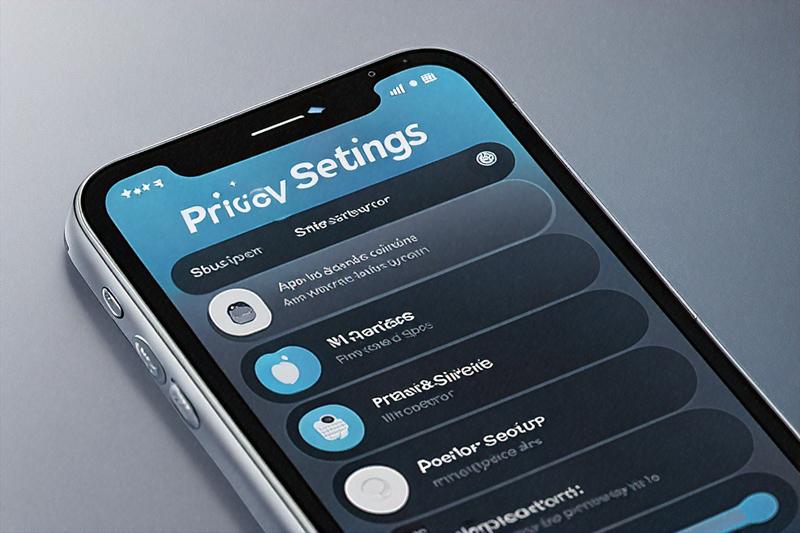
So you've got an iPhone. Maybe you picked it up because you heard Apple takes privacy seriously, or maybe you just liked the camera. Either way, you're sitting on one of the most privacy-capable phones money can buy — and there's a decent chance you haven't configured most of it. Don't feel bad. Apple buries a lot of these settings three or four taps deep, and unless you're the kind of person who reads release notes for fun, you'd never know half of them exist.
Grab your phone. Grab some chai. Let's go through this properly.
App Tracking Transparency — The Big One
This is probably the single most impactful privacy feature Apple has shipped in years, and it takes about ten seconds to set up. Head to Settings > Privacy & Security > Tracking. You'll see a toggle at the top: "Allow Apps to Request to Track." Turn it off.
What does this actually do? Every iPhone has something called an IDFA — an Identifier for Advertisers. It's a unique string of numbers and letters that advertising networks use to follow you across apps and websites. When you open Flipkart, scroll through some shoes, then switch to Instagram and see an ad for those exact shoes? That's the IDFA at work. By disabling app tracking requests, you're telling iOS to automatically reject any app's attempt to access this identifier. The apps can still ask, but iOS will deny the request without even showing you the prompt.
This matters a lot for Indian users specifically. Apps like Meesho, ShareChat, Myntra, and dozens of others are known to request tracking permissions heavily. A 2025 study by a Delhi-based privacy researcher found that the average Indian iPhone user had granted tracking permission to 11 apps without realizing it. Eleven. That's eleven separate companies building a profile of your behavior across their platforms and sharing it with ad networks.
One thing to know: turning off tracking won't break any app. It doesn't affect functionality. Your Zomato orders will still arrive. Your PhonePe transactions will still work. The only thing that changes is that advertisers can't connect your activity across different apps. That seems like a pretty good trade-off.
Location Services — More Granular Than You Think
Open Settings > Privacy & Security > Location Services. This screen shows you every app that has requested access to your location, along with the permission level you've granted. Here's where most people make mistakes: they either leave everything on "Always" because they tapped "Allow" without thinking during setup, or they turn location services off entirely and then can't figure out why Maps doesn't work.
The sweet spot is in between. Go through each app individually. For ride-hailing apps like Ola and Uber, "While Using the App" makes sense — they need your location to find you a ride, but they don't need it when you're sleeping. Same for food delivery services like Swiggy and Zomato. For weather apps, news apps, shopping apps? "Never" is probably fine. Most of these apps can work with a manually entered city name instead of GPS coordinates.
Now here's a feature that even a lot of iPhone enthusiasts miss: Precise Location. Below each app's permission level, there's a toggle called "Precise Location." When enabled, an app gets your exact GPS coordinates — accurate to within a few meters. When disabled, the app only gets an approximate location — a general area roughly 10-15 square kilometers. For something like a food delivery app, you genuinely need precise location so the driver can find your door. For an app like Instagram or Twitter? They don't need to know your exact building. Turn precision off for anything that doesn't need it.
There's another setting buried further down in Location Services that's worth checking: System Services. Scroll to the bottom of the location services page and tap it. You'll find toggles for things like "Location-Based Alerts," "Location-Based Suggestions," "Significant Locations," and "iPhone Analytics." Significant Locations is the interesting one — Apple uses it to learn places you visit frequently. It's encrypted and stored locally, and Apple says it doesn't read it. But if that makes you uncomfortable, you can turn it off and clear the history. I'd suggest at least reviewing what it's collected. You might be surprised at how detailed the map of your daily routine is.
Safari Privacy — Your Browser Is Chatty
If you use Safari as your main browser (and since it's the default, most Indian iPhone users do), there are several privacy settings worth configuring. Open Settings > Apps > Safari and scroll down.
Prevent Cross-Site Tracking should be on. This is Apple's Intelligent Tracking Prevention feature. It blocks third-party cookies and tracking scripts from following you across websites. When you visit a shopping site and then notice ads for the same product on a news site later, cross-site tracking is usually responsible. Apple's implementation has gotten quite aggressive over the past couple of iOS versions, and it works well. Leave it on.
Hide IP Address has two options: "from Trackers" and "from Trackers and Websites." The first option routes your connection through Apple's servers only when Safari detects a known tracking domain. The second routes more broadly. If you're an iCloud+ subscriber, I'd recommend "from Trackers and Websites." If you're on the free tier, "from Trackers" is still available and worth enabling. Your IP address reveals your approximate location and your ISP — two data points advertisers love.
Fraudulent Website Warning is another toggle in Safari settings. It checks websites you visit against a list of known phishing and malware sites. There's a privacy trade-off here — Apple sends a hashed version of the URL to its safe browsing service to check it — but given the volume of phishing targeting Indian users (fake banking sites, fraudulent UPI pages), I'd leave it on. The phishing protection probably outweighs the metadata exposure for most people.
For sensitive browsing — checking bank statements, researching health conditions, anything you wouldn't want in your browsing history — use Private Browsing. In iOS 17 and later, private tabs are locked behind Face ID or Touch ID by default. This means even if someone picks up your unlocked phone, they can't see your private browsing tabs without biometric authentication. It's a small but thoughtful feature.
Mail Privacy Protection
This one's quick but worth doing. Go to Settings > Apps > Mail > Privacy Protection and enable Protect Mail Activity. What this does is route all email content through Apple's servers, preloading remote images and tracking pixels before they reach your device. The result: email senders can't tell when (or if) you opened their email, and they can't see your IP address.
If you've ever unsubscribed from a brand's mailing list and then continued receiving emails — "We noticed you haven't opened our last email!" — that's because they were tracking your opens via invisible pixels embedded in the email. Mail Privacy Protection defeats this. It's especially useful against marketing emails from Indian e-commerce brands, banks, and fintech companies that track open rates obsessively.
The downside? Negligible. Some email senders won't be able to tailor their content based on your engagement patterns. I'd argue that's a feature, not a bug.
Siri, Search, and What Apple Knows
Siri collects voice data to process your requests, and while Apple has made significant improvements to on-device processing (most Siri requests in iOS 17+ are processed locally), there are still settings worth reviewing. Head to Settings > Siri & Search.
The first thing to check: Improve Siri & Dictation. If this is enabled, Apple may review a small sample of your Siri audio recordings (anonymized, they say) to improve the service. In 2019, there was a minor scandal when contractors reviewing Siri audio heard sensitive personal conversations. Apple overhauled the program after that, but if you'd rather not participate, turn it off. Your Siri experience won't noticeably change.
Below that, you'll find per-app settings controlling whether Siri can learn from each app and show suggestions based on your usage. An app like your banking app or a private messaging app probably doesn't need to feed data into Siri's suggestion engine. Go through the list and disable "Learn from this App" for anything sensitive. It takes a few minutes, but it's a one-time task.
There's also a broader "Suggestions" section where you can control whether Siri suggestions appear on the lock screen, in search, and during sharing. If you're someone who hands your phone to friends or family occasionally, turning off lock screen suggestions prevents Siri from surfacing potentially embarrassing app suggestions based on your usage patterns.
Analytics and Diagnostics — The Hidden Data Pipeline
Go to Settings > Privacy & Security > Analytics & Improvements. You'll find several toggles here, and I'd recommend turning all of them off unless you have a specific reason to leave them on. Here's what each one does:
Share iPhone Analytics sends daily diagnostic and usage data to Apple. This includes information about how you use your device, which apps crash, hardware performance, and more. Apple says it's anonymized and aggregated. You can tap "Analytics Data" at the bottom of the screen to see exactly what's being collected — it's a wall of technical logs that's genuinely hard to parse, which is kind of the point.
Share with App Developers sends crash reports and usage statistics to the developers of apps you use. Some developers use this data responsibly to fix bugs. Others use it to track engagement patterns. Since you can't control which developers handle this data responsibly, I'd turn it off and let developers rely on their own analytics SDKs (which you've hopefully limited via App Tracking Transparency).
Improve Siri & Dictation and Share iCloud Analytics round out the list. Both are worth disabling for the same reasons. The data Apple collects through these channels is probably not personally identifying in any meaningful way, but the principle matters: you should opt into data sharing, not be opted in by default. Apple gets a lot of credit for being privacy-first, and they genuinely are better than the alternatives, but they still default to collecting more than strictly necessary.
The App Privacy Report — Your Weekly Audit
This feature was introduced in iOS 15 and it's still one of the most underused privacy tools on the iPhone. Go to Settings > Privacy & Security > App Privacy Report and enable it. Once active, iOS tracks which apps access your camera, microphone, contacts, photos, and location — and how often. It also logs the network domains each app contacts.
Check this report once a week. Seriously. You'll probably be startled the first time you look at it. An app you haven't opened in days might be accessing your location in the background. A game might be contacting advertising domains every few minutes. A news app might be reading your contacts for no obvious reason.
When you spot something suspicious, you have options: revoke the permission, delete the app, or at minimum, restrict it to "While Using" access. The App Privacy Report turns a lot of invisible data collection into visible data collection, and that visibility alone changes your relationship with the apps on your phone.
I know a friend in Pune who checked her App Privacy Report and found that a popular Indian meditation app was accessing her microphone an average of 40 times per day. She hadn't opened the app in three weeks. That's the kind of thing this report surfaces.
Lockdown Mode — Not for Everyone, but Worth Knowing About
Lockdown Mode is Apple's most extreme privacy feature, and it's not meant for everyday users. It's designed for people who face targeted digital threats: journalists covering sensitive stories, activists, lawyers working on high-profile cases, government officials. If you're none of those things, you can probably skip this section. But if you are — or if you might be in the future — this is worth understanding.
You'll find it at Settings > Privacy & Security > Lockdown Mode. When enabled, it drastically restricts your iPhone's functionality in exchange for a hardened security posture. Message attachments other than images are blocked. Link previews in Messages are disabled. FaceTime calls from unknown contacts are blocked. Shared albums in Photos are removed. Complex web technologies in Safari are disabled (which will break some websites). Configuration profiles can't be installed. Wired connections to other devices are blocked when the iPhone is locked.
It's aggressive. It'll make your phone less convenient to use, and some websites won't render properly. But for someone who might be targeted by state-sponsored spyware like Pegasus — which has been documented targeting Indian journalists and opposition figures — Lockdown Mode provides a meaningful layer of protection. The trade-offs are real, but so are the threats for certain people in India.
The Privacy Report Card in the App Store
This isn't a setting on your phone, but it's a tool you should use before installing any app. When you browse an app in the App Store, scroll down to the "App Privacy" section. You'll see a summary of what data the app collects, organized into categories: "Data Used to Track You," "Data Linked to You," and "Data Not Linked to You."
These labels are self-reported by developers, so they're not perfectly reliable. But they're a useful starting filter. If a flashlight app says it collects your location, contacts, and browsing history, that's a red flag regardless of whether the label is completely accurate. Apple has been getting stricter about auditing these labels since 2024, and apps that misrepresent their data practices risk removal from the store.
Before downloading any Indian app — whether it's a government service portal, a fintech app, or a regional news aggregator — check this section. You might think twice about installing an app that wants access to everything when a simpler alternative exists.
How iPhone Privacy Compares to Android in India
This isn't about declaring a winner. Both platforms have improved dramatically over the past few years. But there are differences that matter for Indian users.
On the tracking front, Apple's App Tracking Transparency has no true equivalent on Android. Google introduced limited app tracking controls in Android 13, but the implementation is weaker and easier for app developers to circumvent. In practice, Android users in India are tracked far more heavily by advertising networks than iPhone users.
On the permissions front, Android has caught up significantly. Android 14's per-app photo access (choosing which specific photos an app can see rather than granting access to your entire library) mirrors a feature Apple introduced in iOS 14. Both platforms now offer approximate vs. precise location toggles. Android's "Permission usage dashboard" is comparable to Apple's App Privacy Report.
Where Apple still has a meaningful edge is in its control over the hardware-software stack. Because Apple makes both the iPhone and iOS, it can implement privacy features at a deeper level. Secure Enclave hardware, on-device processing for Face ID, and hardware-level data encryption are tightly integrated in ways that Android OEMs can't always match. Samsung and Google Pixel phones come close, but the fragmented Android ecosystem means that cheaper Android phones — which dominate the Indian market — often lack these hardware-level protections.
The flip side: iPhones are expensive. In India, the cheapest new iPhone costs roughly Rs 50,000-60,000, while perfectly capable Android phones start at Rs 10,000. Privacy shouldn't be a luxury, but right now, the strongest out-of-the-box privacy protections do come at a premium price point. That's a real problem.
One Thing to Do Right Now
If you've read this far and haven't picked up your phone yet, here's your one action item: go to Settings > Privacy & Security > Tracking and turn off "Allow Apps to Request to Track." It takes five seconds. It's the single biggest privacy improvement you can make on your iPhone, and it costs you nothing in terms of functionality. Everything else in this guide can wait for the weekend, but that one toggle? Do it now. Your future self, the one who doesn't get weirdly targeted ads based on a private conversation you had near your phone, will be grateful.
Written by
Amit PatelTech Security Writer
Amit Patel is a technology journalist and security researcher who covers mobile security, app privacy, and emerging threats targeting Indian users. He previously worked with leading Indian tech publications before joining PrivacyTechIndia.
Related Posts
How to Audit App Permissions on Your Phone
People say they care about phone privacy, then hand every app blanket access to their camera, microphone, contacts, and location. Here's how to actually check what your apps can see and shut down the ones that are overreaching.
Indian Banking Trojans: Protecting Your Financial Apps
Someone asked me last week: 'Can a virus actually steal money from my phone?' The short answer is yes. Banking trojans designed specifically for Indian UPI and banking apps are more common than most people realise.
IoT Devices in Indian Homes: Privacy Risks You Are Ignoring
Your smart speaker is always listening. Your Wi-Fi camera is phoning home to servers you've never heard of. Indian households are filling up with connected gadgets and barely anyone's asking what data leaves the house.